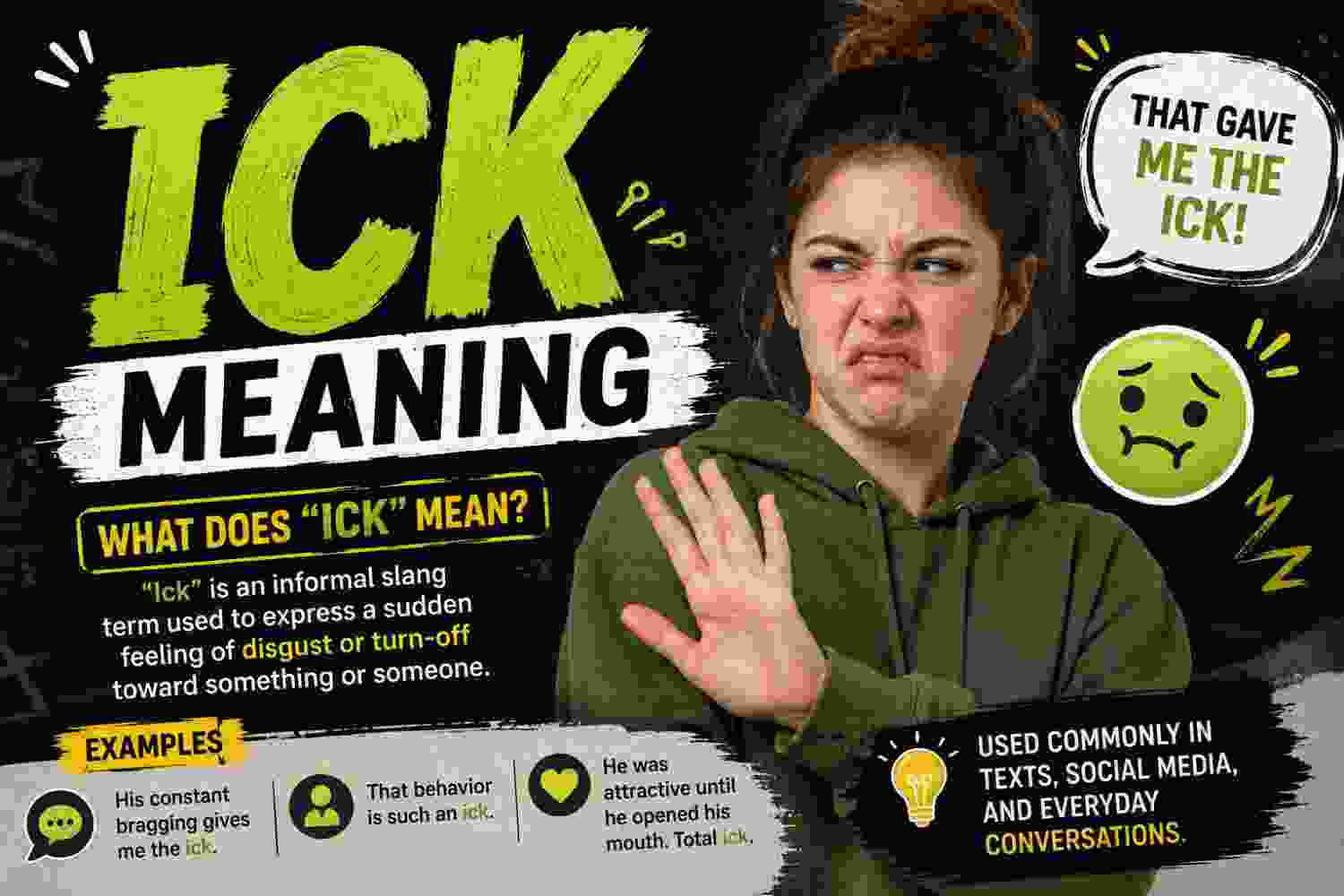
Ick Meaning: Why That Sudden Dating “Turn-Off” Feels So Real
You were into them. Genuinely into them. Then they laughed a certain way, or chewed too loud, or said one weird sentence — and something in you just switched off.
That switch has a name now, and it’s spreading across every dating app bio and TikTok comment section. This guide breaks down the real ick meaning, where it came from, and what your brain is actually doing when it hits.
What Does “Ick” Actually Mean?
The ick is that sudden wave of cringe or disgust you feel toward someone you were previously attracted to. It’s not a slow fade of interest. It’s fast, physical, and often triggered by something small.
Think of it as your attraction flipping a breaker switch. One moment you’re texting them back within seconds. The next, their name popping up on your screen makes your stomach drop a little.
Most people describe it the same way: embarrassing, sudden, and almost impossible to explain to someone who hasn’t felt it. That’s exactly why the term took off online — it finally gave a name to a very common, very confusing feeling.
Where the Term Came From
The phrase isn’t brand new slang invented on TikTok, even though the app made it viral. Reality TV shows and early 2000s British sitcoms used versions of “the ick” long before Gen Z adopted it as dating shorthand.
- It resurfaced hard around 2021-2022 on social media
- TikTok creators started sharing “ick lists” that went viral
- Dating coaches and psychologists picked it up to explain real client experiences
By 2023, the word had moved from slang into actual relationship vocabulary used in therapy sessions and dating app marketing.
Why Does the Ick Happen So Suddenly?
The majority of people make mistakes in this area. The ick isn’t really about the small thing that triggered it. A weird laugh or an odd walking style is rarely the real issue.
Psychologists suggest the ick is often your subconscious flagging a deeper compatibility concern before your conscious brain catches up. The small trigger is just the visible tip of something bigger underneath.
The Science Behind the Feeling
Attraction runs on a mix of hormones, subconscious pattern-matching, and social conditioning. When something breaks the illusion you’ve built around a person, your brain reacts almost like a mild threat response.
- Dopamine drops sharply when the “fantasy version” of someone cracks
- Your brain compares them to a mental checklist you didn’t know you had
- Small behaviors can symbolize bigger fears, like immaturity or low confidence
That’s why two people can watch the exact same guy trip and laugh — one finds it charming, the other feels the ick instantly. Context and personal history shape the reaction completely.
Common Ick Triggers People Report
No two ick lists look identical, but patterns show up again and again across surveys and social threads. Here’s a breakdown of the most frequently mentioned triggers.
| Trigger Category | Example Behavior | Reported Frequency |
|---|---|---|
| Social confidence | Being overly nice to waitstaff for approval | Very common |
| Physical habits | Odd walking style or exaggerated gestures | Common |
| Communication | Texting in all lowercase with no punctuation | Common |
| Overeagerness | Saying “I love you” too early | Very common |
| Grooming | Specific shoe choices or overuse of cologne | Moderate |
| Family dynamics | Being rude to their own parent in public | Common |
A quick human take on this table: most triggers cluster around confidence and social awareness, not appearance. That tells you the ick is rarely about looks — it’s about how someone carries themselves.
Ick Triggers by Gender (What Research Suggests)
Surveys from dating apps and relationship researchers show some overlap but also real differences between how men and women report feeling the ick.
- Women more often cite low social confidence or people-pleasing behavior
- Men more often mention perceived neediness or oversharing too soon
- Both genders rank “trying too hard” as a top-five universal trigger
Is Feeling the Ick a Red Flag About You?
This question causes real anxiety, and it deserves an honest answer. Feeling the ick doesn’t automatically mean you’re shallow or incapable of real connection.
Sometimes it genuinely reflects incompatibility your gut noticed early. Other times, it reflects your own fear of intimacy showing up disguised as disgust toward the other person.
When the Ick Might Be About You
- You feel it every single time someone gets emotionally close
- The trigger seems random and disappears once you talk it through
- You have a pattern of losing interest right after things get serious
If this sounds familiar, it’s worth reflecting honestly instead of blaming the other person every time. A pattern across multiple relationships usually points inward.
When the Ick Might Be a Genuine Signal
- The behavior reveals something about character, not just quirks
- You feel the same discomfort even after getting to know them better
- Friends who meet them independently notice similar red flags
How to Handle the Ick Without Being Cruel
Feeling the ick doesn’t give anyone a free pass to be unkind. There’s a difference between honoring your gut and ghosting someone over something petty and fixable.
Steps to Take Before You Write Someone Off
- Pause before reacting and ask if the trigger is really about compatibility
- Talk to a trusted friend and describe the moment without exaggeration
- Give it one more interaction before deciding it’s a dealbreaker
- If the feeling persists, be honest and kind when ending things
Ghosting someone purely because of a laugh or a text style is generally viewed as immature by most relationship experts. Communication, even brief and gentle, tends to age better than silence.
FAQs About the Ick Meaning
What is the simplest definition of the ick?
The ick is a sudden, strong feeling of disgust or disinterest toward someone you were previously attracted to, usually triggered by a small, specific behavior.
Can the ick go away over time?
Yes, sometimes it fades if the trigger was minor or situational, especially once emotional connection deepens and the initial cringe reaction settles down.
Is the ick the same as losing feelings?
Not exactly. Losing feelings is usually gradual, while the ick hits suddenly and often centers on one clear, specific trigger you can point to.
Do therapists take the ick seriously?
Many relationship therapists acknowledge it as a real psychological response worth exploring, especially when it repeats across multiple relationships for the same person.
Why do I get the ick with everyone I date?
Repeated ick reactions across different partners can sometimes signal a fear of vulnerability or attachment avoidance, which a therapist can help you unpack.
Is it okay to end things because of the ick?
Yes, personal attraction and comfort matter in relationships, but pair the decision with honest, respectful communication instead of disappearing without explanation.
Can guys feel the ick too, not just women?
Absolutely. Men report the ick just as often, though social media conversation around the term has historically centered more on women’s experiences.
Final Verdict on the Ick
The ick isn’t some shallow internet joke — it’s a real, well-documented emotional response that mixes psychology, instinct, and personal history into one uncomfortable moment.
Trust it when it repeats with clear reasoning behind it, but question it when it shows up every single time things start feeling real. Your gut is useful, but it isn’t always right