Celibate Meaning: 7 Secret Truths Nobody Tells You in 2026
Most people hear the word “celibate” and instantly picture a monk locked away from the world. That image is wrong, outdated, and honestly a little unfair to millions of people choosing this path for reasons that have nothing to do with religion.
If you’ve typed “celibate meaning” into Google, you’re probably trying to figure out whether it applies to you, a friend, or maybe a partner who just told you something confusing. Stick around, because this guide breaks down the real definition, the difference between celibacy and abstinence, and the psychological side nobody talks about.
What Does Celibate Actually Mean?
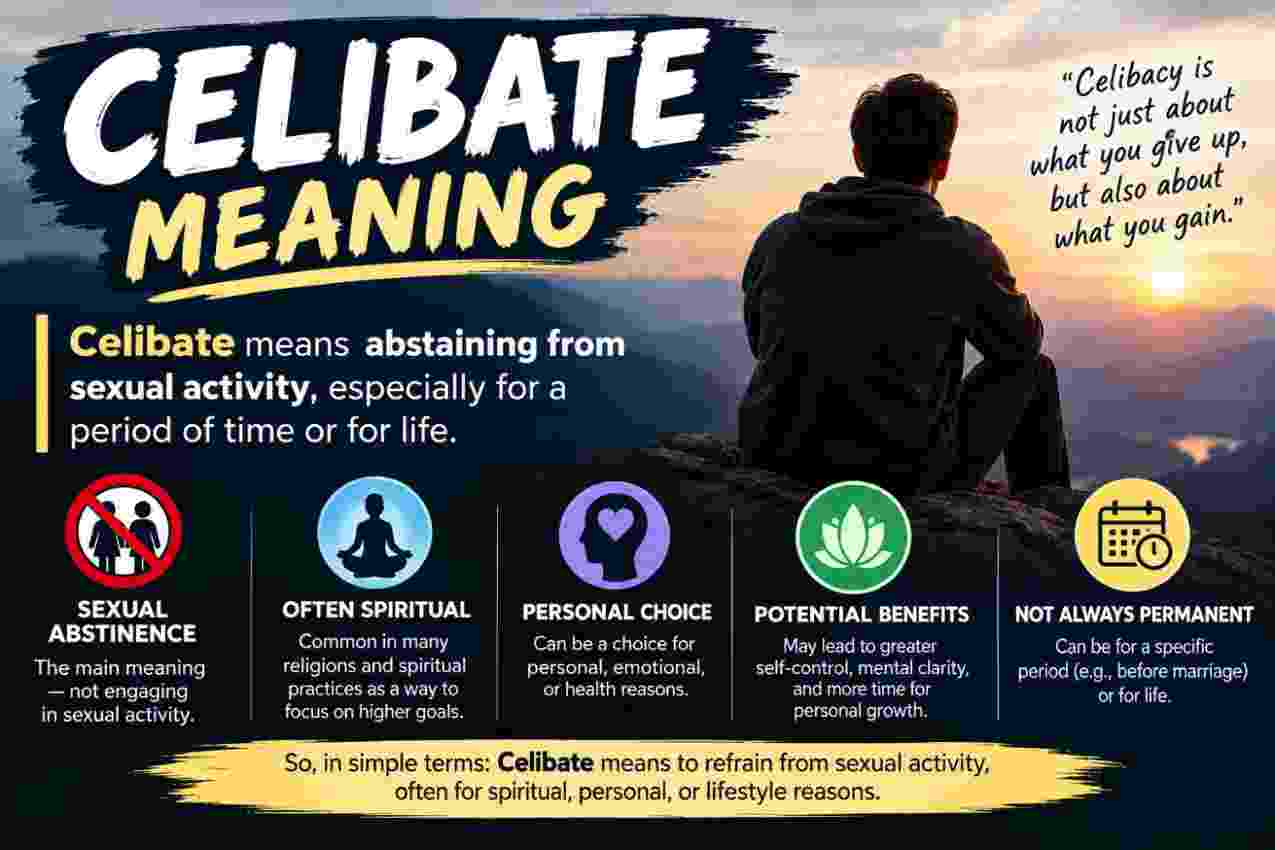
The word celibate comes from the Latin term “caelibatus,” which originally referred to the state of being unmarried. Over centuries, the meaning shifted to describe someone who voluntarily abstains from sexual activity, marriage, or both.
Today, the modern definition is simpler and more personal. A celibate person is someone who chooses not to engage in sexual relationships for a specific period or indefinitely.
The Core Definition Breakdown
- Celibacy is a choice, not a forced restriction
- It can be temporary or lifelong depending on personal goals
- It does not automatically mean someone is asexual
- It often overlaps with personal, spiritual, or emotional healing journeys
Understanding this distinction matters because dictionaries often oversimplify a decision that carries deep emotional weight for the person making it.
Celibacy vs Abstinence: The Confusion Everyone Has
People use these two words like they’re twins, but they’re closer to distant cousins. Knowing the difference actually helps you understand your own intentions better.
Key Differences Explained
| Term | Meaning | Duration | Common Motivation |
|---|---|---|---|
| Celibacy | Voluntary avoidance of sex or marriage | Often long-term or permanent | Personal growth, faith, focus |
| Abstinence | Refraining from sex for a set reason | Usually short-term | Health, religion, waiting for marriage |
| Asexuality | Lack of sexual attraction | Permanent identity | Not a choice, it’s an orientation |
A quick look at this table shows the real gap: celibacy is a decision, abstinence is often a rule, and asexuality is an identity. Mixing these up leads to a lot of unnecessary judgment online.
Why People Choose Celibacy in 2026
The reasons behind this choice have expanded far beyond religious devotion. Modern life has added new emotional and mental triggers that didn’t exist a generation ago.
Common Reasons People Go Celibate
- Healing after a toxic or traumatic relationship
- Wanting to build self-worth outside of physical validation
- Focusing entirely on career or personal ambition
- Religious or spiritual commitment
- Recovering from burnout caused by dating apps
- Rebuilding trust issues before entering a new relationship
Dating app fatigue alone has pushed a surprising number of young adults toward this decision. Constant swiping, ghosting, and shallow connections leave people mentally drained.
The Mental Health Angle
Therapists have noticed a rise in clients using celibacy as a reset button. It’s not about avoiding intimacy forever, it’s about creating space to understand personal patterns.
- It reduces anxiety tied to performance or body image
- It removes the pressure of constant relationship maintenance
- It creates room for self-reflection without outside noise
This shift proves celibacy isn’t a punishment. For many, it’s a form of self-respect.
The Psychological Benefits Backed by Real Patterns
Choosing celibacy often triggers changes that surprise the person making the choice. These aren’t guarantees, but they show up frequently in personal accounts and therapy discussions.
What People Commonly Report
- Sharper focus on personal goals and career growth
- Stronger emotional boundaries in future relationships
- Increased self-awareness around attachment style
- A noticeable drop in anxiety linked to dating pressure
One important note: celibacy is not a cure for loneliness. It works best when paired with genuine self-work, not avoidance.
Common Myths About Celibate People
Misunderstandings around this lifestyle create unnecessary stigma. Let’s clear up the biggest misconceptions people still believe.
Myth 1: Celibate People Hate Intimacy
This is false. Many celibate individuals crave emotional closeness, they just pause the physical side of relationships.
Myth 2: It’s Always Religious
Religion plays a role for some, but plenty of people choose celibacy for purely personal or psychological reasons.
Myth 3: It’s a Permanent Life Sentence
Most people who choose celibacy see it as a chapter, not a lifelong prison sentence. Many return to relationships once they feel emotionally ready.
How Long Does Celibacy Usually Last?
There’s no universal timeline because every person’s reason is different. Some people commit for a few months, others for years, and some never look back.
Typical Duration Patterns
- Short-term: 3 to 6 months for emotional reset
- Medium-term: 1 to 2 years for deeper healing work
- Long-term: Indefinite, often tied to personal identity or faith
The key factor isn’t the calendar. It’s whether the person feels a genuine internal shift, not just forced discipline.
Frequently Asked Questions
What is the simple meaning of celibate?
Celibate means choosing to avoid sexual activity or marriage voluntarily, often for personal, emotional, or spiritual reasons.
Is celibacy the same as being asexual?
No. Celibacy is a choice someone actively makes, while asexuality is an inborn lack of sexual attraction that isn’t a decision at all.
Can a celibate person still date?
Yes, many celibate people date and build emotional connections while simply pausing physical intimacy during that phase.
Does celibacy always relate to religion?
Not anymore. While religious celibacy still exists, a growing number of people choose it for mental health or personal growth reasons.
How do you know if celibacy is right for you?
If you feel emotionally drained by relationships or want space for self-growth, a celibate period could offer clarity and relief.
Can celibacy improve a future relationship?
Many people report entering future relationships with stronger boundaries and better self-awareness after a celibate period.
Is celibacy healthy long-term?
It can be healthy if paired with genuine self-reflection, but isolation without personal growth work can create new emotional gaps.
Final Verdict: The Real Meaning Behind the Choice
Celibacy isn’t about rejecting love or intimacy forever. It’s a personal pause button that gives people room to breathe, heal, and rebuild their sense of self.
Whether someone chooses it for six months or six years, the decision deserves respect instead of judgment. The real meaning behind celibacy isn’t found in a dictionary, it’s found in the personal story of the person living it.