CRM Meaning: What It Really Stands For And Why It Runs Every Successful Business
CRM Meaning: What It Really Stands For And Why It Runs Every Successful Business
Picture this: a customer calls your business for the third time about the same problem, and nobody on your team has a clue what happened the first two times. That awkward silence? It costs real money.
That single moment of confusion is exactly why “CRM meaning” is one of the most searched business terms today. Once you understand what it actually stands for, you will never look at customer relationships the same way again.
By the end of this article, you will know the real definition, how it works behind the scenes, and why so many businesses quietly rely on it to survive.
What Does CRM Actually Stand For?
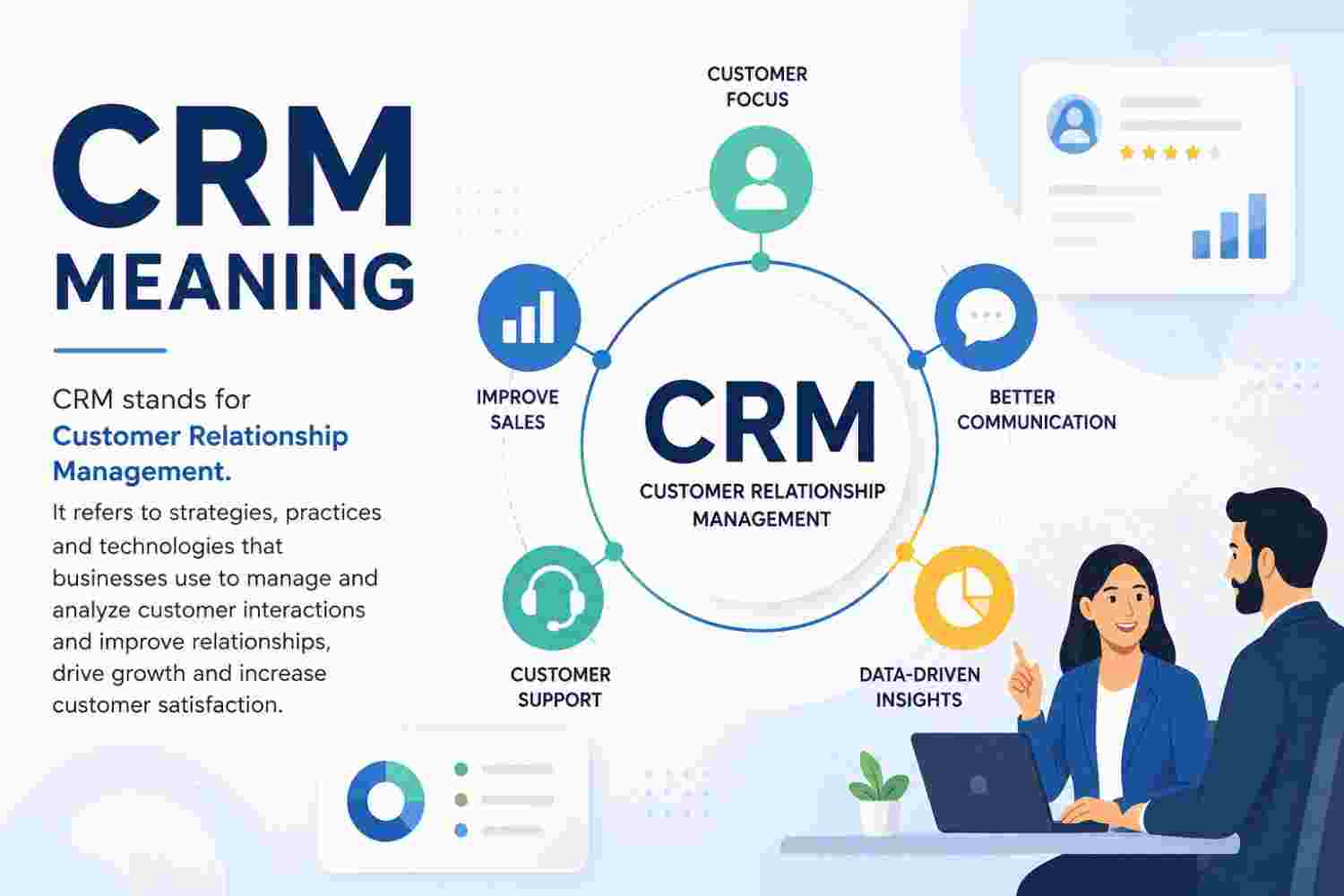
CRM stands for Customer Relationship Management. Strip away the jargon and it simply means a system that tracks every conversation, purchase, and interaction a business has with a customer.
Think of it as a shared memory bank for your entire team. Instead of sticky notes and scattered spreadsheets, everyone can see the exact same customer history in one place.
That shared visibility is the entire point. Nobody has to guess, ask twice, or apologize for forgetting a detail the customer already mentioned.
The Three Layers Hidden Inside CRM Meaning
Most people think CRM is just software. It is actually three things working together.
- The strategy — a company’s overall approach to treating customers well and keeping them loyal
- The process — the actual steps a team follows, like logging calls or scheduling follow-ups
- The technology — the software platform that stores and organizes all that customer data
Skip any one of these layers and the whole system falls apart. Software without strategy is just an expensive filing cabinet.
Why Businesses Actually Need A CRM System
Here is the uncomfortable truth: most small businesses lose customers not because of bad products, but because of forgotten follow-ups. A CRM closes that gap.
It gives sales teams a clear view of who is ready to buy and who needs more nurturing. That clarity alone can shorten sales cycles dramatically.
Customer service teams benefit just as much. When an agent can see a customer’s entire history in seconds, resolution times drop and satisfaction scores climb.
Real Business Problems A CRM Solves
- Losing track of leads after the first contact
- Sales reps forgetting to follow up on time
- Customer complaints slipping through the cracks
- Teams duplicating work because nobody shares information
- Managers having zero visibility into what is actually happening with clients
Each of these problems sounds small on its own. Stacked together, they quietly drain revenue every single month.
How CRM Software Works Behind The Scenes
A CRM platform collects data from multiple channels at once, including email, phone calls, website visits, and social media messages. It then organizes that data into a single customer profile.
From there, the system tags each contact based on where they sit in the buying journey. This is often called pipeline tracking, and it turns guesswork into a visual map.
Automation is where things get genuinely powerful. The software can send reminder emails, alert a rep when a deal goes cold, or trigger a birthday discount without anyone lifting a finger.
Core Features Found In Nearly Every CRM Platform
- Contact and lead management
- Sales pipeline visualization
- Email and calendar integration
- Task automation and reminders
- Reporting dashboards and analytics
- Customer support ticket tracking
- Mobile access for on-the-go teams
Not every business needs all seven features on day one. Start with the two or three that solve your biggest current headache.
CRM Adoption Statistics Worth Knowing
Numbers tell a story that opinions cannot. Here is a quick snapshot of where CRM adoption stands heading into 2026.
| Metric | Data Point |
|---|---|
| Businesses using CRM software | Over 91% of companies with 10+ employees |
| Average ROI per dollar spent | Around $8.71 return for every $1 invested |
| Sales productivity increase | Up to 34% improvement reported by users |
| Customer retention improvement | Roughly 27% higher with active CRM use |
| Most common industry adopters | Retail, real estate, healthcare, and finance |
The takeaway here is simple. CRM is no longer a luxury tool for big corporations; it has become standard practice across nearly every industry that deals directly with customers.
Small teams often assume they are too small for a formal system. The data suggests the opposite: smaller teams often see faster ROI because their processes were less structured to begin with.
Types Of CRM Systems You Should Know
Not all CRM platforms serve the same purpose. Picking the wrong type wastes both time and budget.
Operational CRM
This type focuses on daily tasks like sales automation, marketing campaigns, and service tickets. It is the most common choice for businesses wanting immediate efficiency gains.
Analytical CRM
This version digs into customer data to spot patterns and predict future behavior. Marketing teams lean on this heavily to personalize campaigns.
Collaborative CRM
This one bridges the gap between departments, so sales, marketing, and support teams all work from the same customer information. It works best in companies where teams tend to operate in silos.
Choosing The Right CRM For Your Business
Selecting a CRM should never start with the software itself. It should start with the specific problem you are trying to fix.
- Define your biggest pain point before browsing any platform
- Check integration options with tools you already use daily
- Test the mobile experience, since many teams work from phones
- Ask about onboarding support, because a confusing setup kills adoption
- Compare pricing tiers against the features your team will actually use
A CRM that looks impressive in a demo but sits unused three months later is a wasted investment. Simplicity often beats a feature-packed platform nobody wants to open.
Frequently Asked Questions
What does CRM mean in simple terms?
CRM means Customer Relationship Management. It refers to the strategy, process, and software a business uses to organize and improve every interaction with its customers.
Is CRM only for large companies?
No, CRM works for businesses of any size. Many affordable platforms are built specifically for solo entrepreneurs and small teams.
What is the difference between CRM and email marketing tools?
Email tools focus only on sending messages, while CRM tracks the full customer relationship, including calls, deals, support tickets, and purchase history.
How much does a CRM system typically cost?
Pricing ranges widely, from free basic plans to $100 or more per user monthly for advanced enterprise platforms. Most small businesses find solid options between $15 and $50 per user.
Can a CRM help with customer retention?
Yes, a CRM flags inactive customers and reminds teams to reach out before they churn, which directly supports stronger retention numbers.
Do I need technical skills to use a CRM?
Most modern CRM platforms are built with drag-and-drop interfaces requiring no coding knowledge. Basic computer familiarity is usually enough.
What industries benefit most from CRM software?
Retail, real estate, healthcare, financial services, and any business with repeat customers see the strongest results from CRM adoption.
Final Verdict
CRM meaning boils down to one idea: never let a customer feel forgotten. Every feature, dashboard, and automation exists purely to protect that one relationship.
If your team still relies on memory and scattered notes, that gap is costing you customers right now, even if nobody has said it out loud yet. The businesses pulling ahead in 2026 are the ones treating customer data as seriously as they treat their bank accounts.
🎮 Want More Guides?
Explore more tips, codes, patches and gaming guides in our Blog Arena.
▶ Browse All Quests