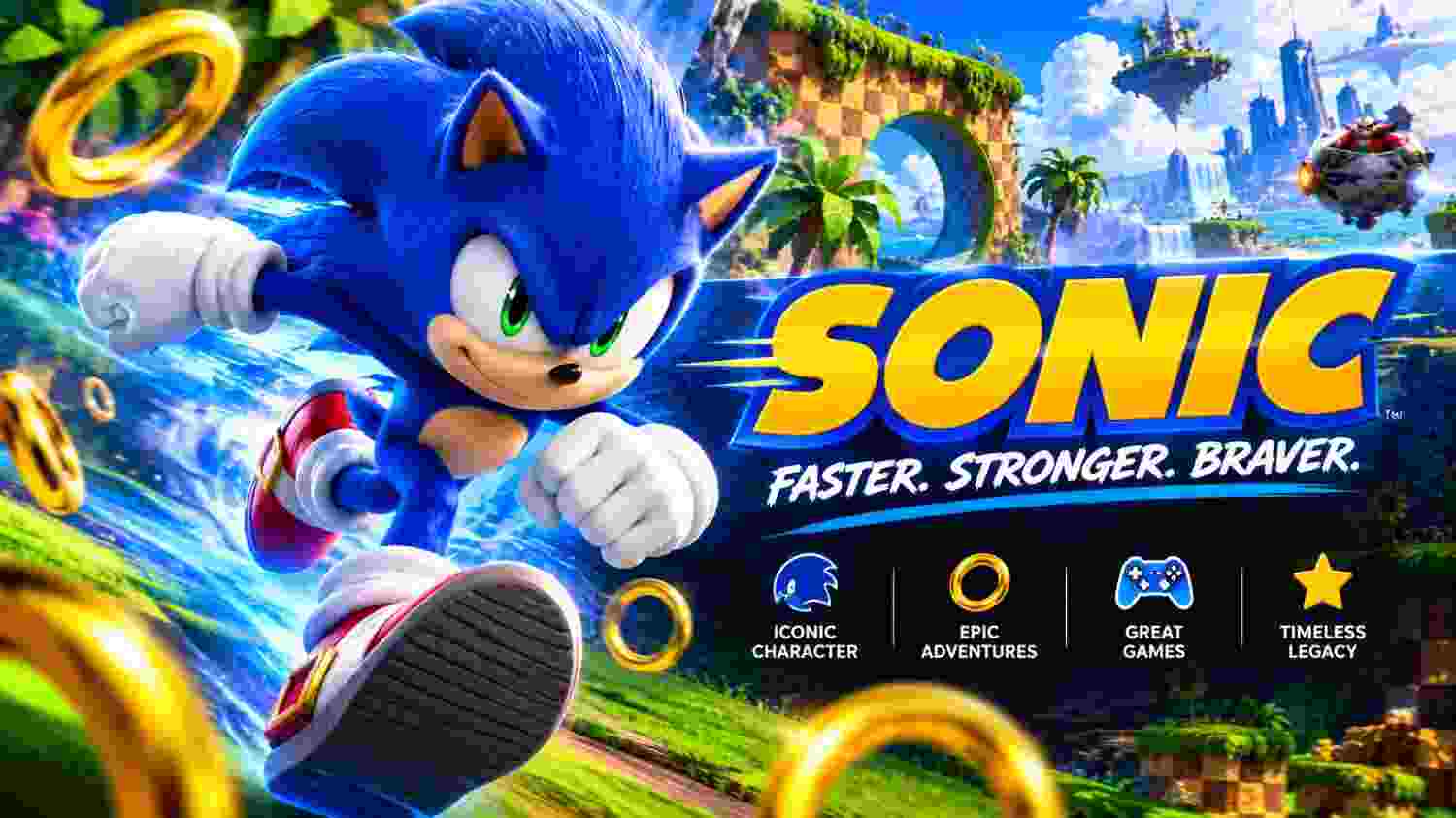
Sonic the Hedgehog: The Complete Guide to Games, Characters, and Cultural Impact
Sonic the Hedgehog: The Complete Guide to Games, Characters, and Cultural Impact
You remember the thrill of watching a blue hedgehog tear through loops at breakneck speed. Then you picked up a newer title and felt confused by tangled storylines and uneven level design. This guide solves that frustration by walking you through everything about Sonic — from his 1991 debut on Sega Genesis to his latest open-zone adventures and blockbuster movie appearances.
What Makes Sonic the Fastest Character in Gaming History?
Speed is not just a gameplay mechanic for Sonic — it is his entire identity. Sega created him in direct response to Nintendo’s Mario, wanting a mascot that represented pure velocity and attitude. While Mario jumped carefully across platforms, Sonic blasted forward with momentum-based physics that rewarded players for maintaining speed.
The original development team at Sonic Team, led by programmer Yuji Naka and artist Naoto Ohshima, built the game engine around one core idea: the faster you move, the more fun you have. This philosophy separated Sonic from every other platformer on the market and gave Sega a genuine competitor during the 16-bit console wars.
His signature spin dash move lets players curl into a ball and launch forward like a cannon shot. Combine that with spring pads, loop-de-loops, and downhill slopes, and you get a gameplay loop that feels like riding a roller coaster. No other character in gaming history has made speed feel this satisfying.
How Did Sonic the Hedgehog Begin on Sega Genesis?
Sega needed a mascot in 1990. Mario dominated the market, and Sega’s existing character, Alex Kidd, failed to capture mainstream attention. The company held an internal competition asking employees to design a character that could rival Nintendo’s plumber.
Naoto Ohshima sketched a teal hedgehog with red shoes and a confident smirk. Yuji Naka programmed a tech demo showing a sprite rolling through a tube at high speed. When the two concepts merged, the foundation for Sonic the Hedgehog was born.
The game launched on June 23, 1991, bundled free with every new Sega Genesis console in North America. That single decision helped Sega capture 65% of the 16-bit market within two years, according to sales data reported by. Players who had never touched a Genesis suddenly bought one just to experience the Blue Blur firsthand
Which Sonic Games Defined a Generation of Players?
Not every entry in the franchise hits the same mark, but several titles stand out as masterpieces that shaped gaming culture.
- Sonic the Hedgehog (1991): The original. Seven zones, six Chaos Emeralds, and a final boss fight against Dr. Eggman that every 90s kid remembers.
- Sonic the Hedgehog 2 (1992): Introduced Tails as a playable sidekick and added the spin dash mechanic. Many fans consider this the peak of 2D Sonic gameplay.
- Sonic 3 & Knuckles (1994): A massive 14-zone adventure with three playable characters, interconnected storylines, and the lock-on cartridge system that let players combine two games into one.
- Sonic Adventure (1998): The franchise’s leap into full 3D on the Sega Dreamcast. Six playable characters, each with unique gameplay styles, and a story involving the ancient entity Chaos.
- Sonic Generations (2011): A love letter to the entire series that blended classic 2D stages with modern 3D speed sections.
- Sonic Mania (2017): Developed by Christian Whitehead and a team of dedicated fan-game creators, this title returned to pixel-perfect 2D gameplay and earned universal critical praise.
Each of these games pushed the franchise forward and gave players a reason to keep running.
How Do Chaos Emeralds Power the Sonic Storyline?
The seven Chaos Emeralds function as the central plot device across nearly every Sonic game. Each emerald holds unlimited energy tied to a specific color: red, blue, green, yellow, white, cyan, and purple.
When a character gathers all seven, they unlock a Super transformation. Super Sonic glows gold, becomes invincible, and gains the ability to fly. This mechanic first appeared in Sonic the Hedgehog 2 and has remained a staple reward for dedicated players who explore every hidden stage.
The emeralds also attract villains. Dr. Eggman constantly schemes to harness their power for his Death Egg space station or his robotic armies. In Sonic Adventure, the emeralds’ negative energy gives birth to Perfect Chaos, a water-based entity that floods an entire city.
The lore runs deeper than simple collectibles. According to the, the emeralds connect to the Master Emerald, a larger gem guarded by Knuckles that can neutralize or amplify their power. This layered mythology gives the franchise a surprising amount of narrative depth for a series about a running hedgehog.
What Changed When Sonic Moved to 3D Gameplay?
Sonic Adventure launched alongside the Sega Dreamcast in 1998 and stunned players with its open hub worlds, multiple character campaigns, and cinematic cutscenes. The speed stages felt incredible. Running down the side of a skyscraper in Station Square gave players a rush that 2D games could never replicate.
However, the transition also introduced problems. Camera control became inconsistent. Physics that worked perfectly on a flat plane broke down in three-dimensional space. Later titles like Sonic the Hedgehog (2006) suffered from long loading times, glitchy controls, and bizarre story choices that alienated longtime fans.
Sonic Team learned from these missteps. Sonic Generations and Sonic Colors returned to tighter, more linear level design that prioritized speed over exploration. The modern approach blends short, intense speed bursts with platforming sections that give players breathing room
Why Did the Sonic Movies Break Box Office Records?
The first Sonic the Hedgehog film (2020) almost became a disaster. The initial trailer revealed a hyper-realistic character design with human-like teeth and proportions that terrified audiences online. The backlash spread across social media within hours.
Paramount Pictures made a rare decision: they delayed the film by three months and completely redesigned the character to match his classic game appearance. That gamble paid off massively. The redesigned Sonic looked like the character fans loved, and the movie earned $319 million worldwide against an $85 million budget, per.
Sonic the Hedgehog 2 (2022) expanded the universe by introducing Tails and Knuckles, played by Colleen O’Shaughnessey and Idris Elba respectively. The sequel grossed over $405 million globally and proved that video game adaptations could succeed when studios respect the source material.
How Does Sonic Frontiers Redefine Open-Zone Exploration?
Sonic Frontiers (2022) took the biggest creative risk in the franchise’s modern era. Instead of linear speed stages, the game drops players into massive open zones filled with puzzles, combat arenas, and hidden collectibles.
The Starfall Islands serve as the primary setting. Each island features distinct biomes — lush forests, barren deserts, ancient ruins — and rewards exploration with gear upgrades, skill tree points, and Koco creatures that boost your stats.
Combat received a complete overhaul. Sonic now chains together combo attacks, parries enemy strikes, and unlocks a Cyloop ability that lets him draw circles around objects to interact with the environment. The skill tree lets players customize their playstyle, whether they prefer raw speed or heavy-hitting combos.
The open-zone format divided fans at launch but sold over 3.5 million copies within its first year. Sonic Team confirmed that future titles will continue building on this foundation, blending open exploration with the high-speed stages the series is known for.
What Makes Green Hill Zone the Most Iconic Level in Gaming?
The stage opens with flat ground, gentle slopes, and a clear path forward. New players learn the basic controls without any pressure. Then the terrain tilts downward, momentum builds, and suddenly you are flying through a corkscrew loop at full speed. The level teaches you that speed is safe, rewarding, and fun — all without a single tutorial popup.
The visual design reinforces this feeling. Checkerboard-patterned soil, palm trees swaying against a blue sky, and waterfalls crashing into crystal-clear pools create a world that feels alive and inviting. Masato Nakamura’s upbeat soundtrack locks into your brain after one playthrough and never leaves.
Green Hill Zone has appeared in nearly every major Sonic release since 1991, including Sonic Generations, Sonic Forces, and Sonic Frontiers. It remains the gold standard for opening level design across the entire platformer genre.
How Has Sonic Influenced Modern Game Design?
The ripple effects of Sonic’s design philosophy show up in games you probably play right now.
Momentum-based movement systems in titles like Celeste, Hollow Knight, and Ori and the Blind Forest trace their roots back to the physics engine Yuji Naka built in 1991. The idea that a character’s speed should feel organic — accelerating on downhills, decelerating on inclines, and maintaining inertia through curves — started with Sonic.
The “gotta go fast” mentality also shaped how developers think about player flow. Modern speedrunning communities thrive on games that reward mastery of movement mechanics, and Sonic created the template for that entire subculture.
Even character design owes a debt to the Blue Blur. Sonic proved that a mascot could have attitude, personality, and edge without sacrificing broad appeal. Characters like Crash Bandicoot, Spyro, and Ratchet all followed the path Sonic carved out in the early 90s.
Where Is the Sonic Franchise Heading Next?
Sega has made its intentions clear: Sonic is their most valuable intellectual property, and they plan to expand the brand aggressively across every medium.
On the gaming side, Sonic Team is developing new titles that build on the open-zone framework established by Sonic Frontiers. Leaked job listings and developer interviews suggest a focus on larger worlds, deeper RPG mechanics, and online multiplayer features.
The movie universe continues to grow. Paramount has greenlit a fourth film and a Knuckles spin-off series for Paramount+. The animated series Sonic Prime on Netflix introduced multiverse storytelling to the franchise and brought in a younger audience.
The IDW comic series, written by Ian Flynn, delivers monthly storylines that rival the best game narratives in the franchise. These comics explore character relationships, moral dilemmas, and world-building details that the games rarely have time to address.
The Blue Blur shows no signs of slowing down — and that is exactly how his fans want it.
Detailed Sonic Game Comparison Table
| Game Title | Release Year | Platform | Playable Characters | Key Feature | Critical Reception |
| Sonic the Hedgehog | 1991 | Sega Genesis | Sonic | Speed-based platforming | 86/100 |
| Sonic the Hedgehog 2 | 1992 | Sega Genesis | Sonic, Tails | Spin dash, co-op play | 88/100 |
| Sonic 3 & Knuckles | 1994 | Sega Genesis | Sonic, Tails, Knuckles | Lock-on cartridge system | 93/100 |
| Sonic Adventure | 1998 | Sega Dreamcast | 6 characters | Full 3D hub worlds | 87/100 |
| Sonic Adventure 2 | 2001 | Dreamcast / GameCube | 6 characters | Hero vs. Dark story split | 85/100 |
| Sonic Colors | 2010 | Wii / DS | Sonic | Wisp power-ups | 82/100 |
| Sonic Generations | 2011 | PS3 / Xbox 360 / 3DS | Classic & Modern Sonic | Dual-era level design | 88/100 |
| Sonic Mania | 2017 | PS4 / Switch / PC | Sonic, Tails, Knuckles | Pixel-perfect 2D revival | 91/100 |
| Sonic Frontiers | 2022 | PS5 / Xbox / PC / Switch | Sonic | Open-zone exploration | 78/100 |
Start Running — The Sonic Universe Is Waiting
You now have a complete map of the Sonic franchise from its 1991 origins to its current multimedia empire. Pick up a controller, choose your entry point, and experience the speed that has kept millions of players hooked for over three decades. Share your favorite Sonic memory in the comments below — whether it is your first time clearing Green Hill Zone or the moment you unlocked Super Sonic for the first time. The Blue Blur’s story is still being written, and every new fan adds another chapter.
🎮 Want More Guides?
Explore more tips, codes, patches and gaming guides in our Blog Arena.
▶ Browse All Quests
One Comment